I don’t shit on dogma just for the sake of doing it. I’m just offended by it in principle. Dogma is inherently limiting. Just as William Burroughs commented that you can’t discuss a thing that you don’t have a word for, and thus you are constrained by language, you are also constrained by the symbols and systems inherent to a dogma to which you profess. If you don’t accept the precepts of your system as incontrovertibly true, then you’re not a true believer, and eventually you’ll be shaken out of your framework. This may be via your own disillusionment, policing forces within your movement or tradition that seek to weed out apostates, or even via outside influences that draw you away. Even if you do buy in fully and deeply, there will always be forces and circumstances that will test your devotion.
In my previous magical and spiritual work, I have tried to adhere to various fixed paths, but in each case, I have eventually found their truths to be subjective and narrow, and for my part, I cannot stomach that for very long once the façade begins to erode. Consequently, even as I have become an instructor in the practice of sorcery, I state only that I teach techniques, not Truth. I approach my writing the same way.
Some people need the structure and safety of an established framework through which they can experience the numinous, but in order to obtain that safe haven, they must sacrifice self-determination and ultimately self-actualization for the sake of the system that they are contorting themselves to fit. I have long believed that one of the precious scarcities in the world, and perhaps even the Universe, is true novelty. Experimentation and the expansion of the limits of human experience should be the credo of every magical practitioner. To be rigidly locked into a path prescribed by a hierarchical authority is to surrender that prerogative and to allow ones flame to be dimmed in service to mediocrity.
Author: vargr
Necromancy for Great Justice
This bit of necromancy was performed for Samhain 2020.
We are gathered on this night, when the veil between worlds is pulled back and those who have passed may move freely in our world once more.
The way is open, the path is drawn.
A chime is struck.
We call upon those slain by the words or hands of all tyrants of all ages.
Those whose lives were held cheap by the living embodiments of power without compassion.
The way is open, the path is drawn.
A chime is struck.
Return to this world and let loose your wrath upon the oppressors of this age.
Help now the helpless living shed the fetters of control without consent.
The way is open, the path is drawn.
A chime is struck.
By this sign we unite the worlds.
Let the living and the dead rise as one to smite all despots.
The black altar candle is lit.
Let this flame be a guide to all those who are lost, forgotten, and forsaken.
Rise with your kin and lend your might to our cause.
Like the Erinys of legend, punish the wicked and freeze their hearts with dread.
Let all those who suffer know succor.
Let all those who inflict suffering know fear.
Rise and mete justice!
Rise and wreak havoc!
Rise and taste vengeance!
The way is open, the path is drawn.
A chime is struck three times.
It is complete, it is complete, it is complete.
Servitor Swarm Synergy
This article originally appeared in Konton Magazine, Vernal Equinox 2006, issue 3.1.
Of late I have been studying the phenomenon of distributed processing of function over networks, and the emergence of a superorganism which can result from the collective efforts of numerous components which are themselves quite simplistic. In biological systems, such as ant colonies, a hive mind emerges which coordinates the efforts of all its parts in a non-hierarchical yet efficient way. It is this effect which has inspired engineers to create swarming machines.
I began to contemplate whether or not a similar effect would occur if an interconnected swarm of servitors were created which were not individually invested with a great deal of intent, and were collectively charged with a broad statement of purpose
The result was that I decided to create a cluster of 12 identical servitors, which I refer to as nodes, each charged with the task of gathering information that would be of interest or benefit to me, and funneling such information back to me by any convenient or available communication channel.
Collectively, the construct is designated as “Nexus 0xC”, roughly meaning “the connected 12.” I chose Hexadecimal, or base 16 to represent the numeric portion of the name in order to avoid the commonality of the everyday decimal numbering system. The individual component servitors are identically created from the same visualized seed which divides instantaneously into 12 equal parts. Upon the creation of the 12, each is intended to be self-aware, but is not yet connected to the others.

The symbol of the ultimate manifestation of Nexus 0xC is a dodecagon with an empty circle at each vertex. Each vertex is connected to every other in order to symbolize the network which exists between these servitors. In the center of the network is another empty circle which represents me. Twelve identical tokens were also created to represent the nodes of the nexus, and to be the foci for the individual servitors. By design, these tokens are indistinguishable from one another, to emphasize the uniformity of the members of the swarm.
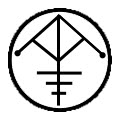
These tokens were deployed in various locations around the city to symbolize the wide scope of this information gathering system. As this was done, the servitors were visualized to emerge from the tokens as coherent, invisible wave forms, and to begin gathering information. This was to be stored until all nodes had been distributed and connected.
The physical components of this operation are accompanied by a corresponding set of visualized counterparts. The virtual seed form of the cluster was visualized as liquid silver-white light coalescing from the void, accumulating into a mirrored, mercury-like sphere. Just as a larger glob of mercury accumulates smaller amounts into itself, increasing the volume of the sphere, the seed was allowed to develop in imaginal space. As each of the node servitors was released from its token, a portion of this energy was visualized to detach and emerge as the wave form of the servitor.
After the final token was distributed, the act of connecting them into the nexus was performed. The original dodecagon symbol was used as the focus for this operation. While focusing on the symbol, a state of excitatory gnosis was entered via a combination of sensory overload, mind-altering substances, and orgasm. At the moment immediately prior to white-out, I visualized a projection as emerging from the symbol as silver-white light, and spreading out to connect the individual nodes. At this moment, all of the nodes became joined through the myriad pathways into Nexus 0xC.
When I meditate and focus my thought on the Nexus symbol, I visualize myself as being within the center hub of the network. If the swarm of node servitors has any information to relay to me, they can then do so through the pathways. I have only recently completed this operation, so I cannot yet report any demonstrable results.
The possibility of a hyper-implementation of this network has also occurred to me, either as a group working, or in further iterations on my own. Additional clusters could be created, and then linked to the original in order to attain an even wider sensory array.
Vargr
February 16, 2006
Magical Mechanics: Spooky Action at a Distance
As I went through notes and materials for the expanded and revised edition of Quantum Sorcery, I found this, which was intended to be my talk for the International Left Hand Path Consortium 2016 in Atlanta Ga. Unfortunately, due to a catastrophic injury, I was unable to attend. Here is the text of the talk:
Magical Mechanics: Spooky Action at a Distance
This presentation examines the relationship and parallels between the magical principles of Similarity and Contagion, and the scientific principles of Entanglement and Entrainment within a non-theistic system of sorcery. Methods of categorizing and overcoming barriers to achieving a mind state conducive to magical practice will also be discussed.
Magic is the name most commonly applied to the faculty of causing change in the phenomenal world via the exertion of will. The vast majority of ostensibly rational people in the western world hold that magic isn’t real. Some of us refute their assertion, and believe that magic is real, that it works, and that we can do it. We disagree on the mechanism, origin, and nature of this phenomenon, but on some level, we believe in it.
Belief is a loaded word in Chaos Magic. We use it as a tool, but try not to collapse into it. We believe that we make our own reality, and that belief is the kernel upon which magical practice is built. If you don’t believe that magic works, then it never will for you, plain and simple.
I practice sorcery. Down and dirty. Simple. Sometimes with tools and rituals, sometimes with sigils and servitors, sometimes with nothing but a picture in my head of how the world needs to be, my very magical wand, and my lovely assistant. I don’t call spirits, I don’t trouble whatever gods or entities might be out there in the ether for their assistance, other than the ones that I have myself created. I assert that Magical acts are transactions between me and the universe. So since we’ve established that I’m enough of an egotistical bastard to think that I can alter the world with a thought, let’s look at how I think I do it.
Fundamentally, everything that IS, is energy. Some of it has slowed down enough to become solid matter, some of it in phases and forms that we are still just discovering. Further, as Hermes Trismegistus observed in his Divine Pymander (pim-Ander), everything that exists is in motion. It is my position that magic originates when the mind of a magician interfaces with the fabric of the universe at the most fundamental level of existence. The perturbations caused by this influence then cascade upward from the subatomic level as movements of matter and energy, into the mesoscale world of human activity, and bring about the circumstances that I dictate. The process is analogous to tossing a pebble into a stream. The ripples are subsumed by the current, but they in turn affect the flow in a measurable way.
How does one make ripples in reality?
Similarity and Contagion = Entanglement
Transmission of Will = Entrainment
The fundamental principles of sorcery are analogous to fundamental principles of energy and quantum behavior. Many of the seminal minds in Chaos Magic have reflected on this. Peter Carroll, Stephen Mace, and Dave Lee are just a few of the pioneers of this school of thought.
Entanglement
The principle of similarity is that of modeling. The representation of a thing is connected to that thing. This is the principle of the macrocosm and the microcosm. This is best exemplified in the words of the Emerald Tablet of Hermes Trismegistus:
What is above is like what is below. What is below is like what is above.
This is the magic of poppets and cave paintings, fertility rites and visualization.
When a pair or a group of particles interact in such a way that that their quantum state can only be described as an aggregate sum, this is known as Entanglement. Einstein referred to this concept as “Spooky action at a distance.” The implication that information could violate relativity by travelling faster than the speed of light didn’t sit well with him. But where he saw a flawed theory, his student David Bohm saw the implication that reality had a hidden structure. Bohm called this The Implicate Order. In this framework, time and space are interpreted as crude surface phenomena that are artifacts of a deeper universal order.
A magician can take advantage of this point of view. In this theoretical sub-microscopic realm, where the true underlying principles are beyond any physical perception, the magical link between simulacra and reality occurs. Since this work takes place at an imperceptible level of existence, manipulation of symbols arises as the only valid mechanism of describing the system. Fortunately. we live in a world rich with symbols, ready to be subverted for nefarious purposes. Besides the more traditional magical and alchemical examples, I also use icons and formulae from mathematics, meteorology, circuit diagrams, and even road signs. Semiotic appropriation is your friend.
Contagion
For magical purposes, if you have a piece of something, you have influence over that thing. In this case, the link between fragment and whole is innate. Through this link, the whole can be made to react in kind to actions worked on the fragment. Again, the system of two entities constitute a single system, and is analogous to an entangled system.
Once the magical link is established, a mechanism must be used to change the state of the system to that which is desired.
Entrainment
Entrainment is the state that occurs when two oscillating systems enter into a relationship by which their frequencies synchronize with one another. When one of these systems compels the other to fall into phase with itself, this is known as forced entrainment. In the normal state of things, we as residents of physical reality fall into a state of entrainment with the world around us in which we are subsumed, but it doesn’t have to be that way. Within our own locality, if we can generate enough intensity, we can cause reverse this order. We can cause the reality around us to fall into the patterns that we dictate.
When in a state of entrainment, information is transferred between the participating systems. There are only two possible states. If you’re not transmitting then you are receiving and thus allowing the universe to have its way with you.
In order to bring reality around to your way of thinking, you must first set your mind with clarity of purpose.
Tuning the Magical Mind
An essential part of doing magic is achieving a mind state in which we are convinced that our workings can have an actual effect. To reach this state, there are several possible impediments that must be overcome. These impediments can be loosely grouped into those that are external to the self and those that are internal.
French philosopher Pierre Teilhard de Chardin coined the idea of the noosphere as the collective sphere of human thought that surrounds us. I refer to the collective constant press of mundane thought and mental noise in the noosphere as The Static. It is the antithesis of the state of gnosis, as the magical mind state is often referred to. The Static is the sum of randomly received signals of all varieties. It is mental white noise that constantly bombards us. There are various ways to suppress it, from meditation, to evocation and banishing, to entheogens.
On the other end of the spectrum of impediments are the internal ones, which are often more daunting. The best known instance of this type is what is often referred to as the Psychic Censor. It is that part of our subconscious mind which performs the essential function of keeping us operating within consensus reality rather than frolicking with the machine elves or following the magic mirror to a nearby star system. Unfortunately it also has the effect of nullifying magical operations by shutting them down via uncertainty and doubt like a disapproving parental figure:
“Magic isn’t real, you must be crazy! Do the neighbors know you think like that? Stop it.”
The Censor must also be subverted for magic to be successful. Ironically, many of the same methods can be used to counteract The Static and the Censor. Inhibitory or excitatory states can work equally well. Ultimately, how this is done is irrelevant, as long as it is done. Calm your mind or blow it. Either way, banish The Static, and shatter the barriers that stand between you and seeing your will manifest. This is the first and most essential act of magic.
Lastly, magic works with probabilities and possibilities. The difference between improbable and impossible is vast. Know the difference. Anticipate the possible outcomes, and give reality a nudge toward the one most favorable to you.
You are of the universe, but it is also of you.
Thanks for your time.
What is the idea behind Voidworking?
I’ve just made my first foray into promoting my books via YouTube:
Voidworking is Now Available!

Voidworking is now available at voidworking.com, or on Kindle.
Voidworking is going to the printer.
I have just made the final approval for the content and cover art for Voidworking, my second book, and sent the signed contract to my publisher. It’s going to the printer.
Voidworking is a system of practical sorcery that draws upon the primordial state of being as a source of power and inspiration for performing acts of Will. This work examines various conceptions of the Void, from ancient religion to modern pop culture to gain a better understanding of how this realm of limitless potential can be embraced rather than feared. Magical techniques, including binding, banishing, evocation, scrying, and others are described that tap into a largely overlooked wellspring of energy that has long been thought to be the purview of divinity. A discussion of ritual tools and practices relevant to the Void is accompanied by meditation practices intended to lessen the intensity of the spurious boundary between the self and the greater Universe. These techniques may be used as a compete magical system on their own or incorporated into your own personal paradigm or practice. Through these methods, something can be made from nothing, and order brought forth from disorder.
Coming soon from Immanion Press.
From the Vaults: Magic, Technology, and the Emergence of the Human Singularity
Vargr, June, 2006
This was originally written to be included in Weaving the Fringe, an anthology that unfortunately never came together.
Any sufficiently advanced technology is indistinguishable from magic.
– Arthur C. Clark’s Third Law of Prediction
It seems to be an innate human desire to seek to extend our awareness and perception of the environment around us, as well as expand our control over it. Over previous millennia it has often been the purview of magic to achieve these goals, but as technology has developed, it has been moving into the niche in our personal spheres that used to belong to magic alone. The encroachment of technology into this realm is not limited to individual space. It has also changed the way in which individuals interact and collaborate.
In place of the fetishes and charms carried by pre-industrial cultures, we now sport an array of electronic devices which allow us to communicate over long distances, capture the images and sounds of our environment, and store information in ways unimaginable to our ancestors. We rely on them to feel safe. They have become our talismans and amulets. In a broader scope, we have also used technology to create new ways of storing and using information itself. We have rendered the mnemonic methods of the orators and alchemists of the past obsolete with our new capabilities.
Nowhere is magical technofetishism more pronounced in contemporary
culture, then in the ‘magick’ rituals practiced by technopagans.
– Amanda Fernbach, Fantasies of Fetishism
It is not an unusual thing that many magicians have begun to assimilate a wide range of technology into their practices. Despite some appearances to the contrary, magic is an innately practical activity. It seeks to instantiate the will of the magician in the phenomenal world, and in many traditions, the results are far more important than the methodology. In both the physical and virtual worlds, we create and use tools in order to extend our capabilities. The nature of these tools can range from physical artifacts to mathematical algorithms. Whichever tools are the most effective, and produce the greatest return for the energy expended are the ones which will naturally be used. It is not necessary to expend energy and time toward achieving results through esoteric means when the use of technology will accomplish the same ends.
The incorporation of technology into magic is by no means a 21st-century phenomenon. One of the most prolific, if often over-looked, chaos magicians of the 20th century, William S. Burroughs, documented the incident in which he used audio tape recordings to project a desired reality upon his environment. After receiving terrible service and treatment at a restaurant, he dubbed discordant sounds over an ambient base track he recorded on the street nearby. He then played the composite tape outside of the restaurant, which resulted in it going out of business.[1] The techniques Burroughs used are still applicable today, but there is obviously a far wider array of technology available to execute them.
A prominent side-effect of the ubiquity of personal communications technology is the emergence of a vast human intelligence network. The phenomenon of emergence itself has become an increasingly popular topic of study even as this has occurred. Emergence, simply explained, is the effect which occurs when a number of discrete units of intelligence or capability interact with one another in a network in order to produce behavior or capabilities which exceed the predicted sum of the contributing units. One of the best real-world examples of this is the bee hive. The hive mind which results from the coordinated fashion in which bees work together is greater than the sum of its parts. This super-organism is capable of feats of exploration, engineering, and memory that far exceed the capabilities of singular insects. For example, the collective memory of a hive possesses a memory of three months. This is twice as long as the life of an average bee[2]
The behavior of insects and their hives have also been studied in order to create swarming machines. These relatively simple and autonomous machines are programmed to seek out and interact with others of their own kind. This can produce a number of complex, unanticipated behaviors.
The human being is a machine. An automated machine.
– Mark Twain, Letters from the Earth
The human intelligence network comprises a powerful parallel-processing supercomputer in which the brains of the human beings who contribute to it serve as the processors. It is not synonymous with the Internet, though the Internet is often seen as the most prominent infrastructure upon which this network of human bio-computers interacts. The problem-solving capacity of large numbers of human collaborators can be seen in a number of arenas, but one of the most interesting is the way in which players of alternate reality games (ARGs) cooperate via online message boards to quickly solve complex puzzles.
The effectiveness with which this network can function across the arbitrary political boundaries which divide the earth into ultimately ephemeral sovereign nations is an illustration of its capability. The joke goes that on the Internet, no one knows you’re a dog. In reality, the capability of the network to obfuscate the nationality, gender, religion, and other demographic factors which frequently contribute to discrimination serve as an egalitarian force which levels the playing field between participants in the collective. In this collaborative information space, the mental capability and unique life experience of each human node becomes more important than the physical form and location of that person in meat-space.
The capability to network effectively also leads to a greater production of information. The rate at which humanity is creating information is growing exponentially. Researchers at the University of California have predicted that humanity, assisted by the machines that we have created, will have created more new information between 2003 and 2006 than during the prior 300,000 years of human history.[3] The availability of resources such as distributed computing over high-speed fiber-optic networks, particularly between computers which are composed themselves of numerous CPUs working in parallel, have given mankind the ability to model the workings of the physical universe at both ends of the scale of existence.
I believe that the human intelligence network is merely a waypoint on the larger collective human journey toward some level of singularity. This event has been proposed by a number of authors and philosophers under various names. One interpretation of this concept is the Omega Point described by Jesuit philosopher Teilhard De Chardin which emphasizes a growing connection among humanity as our population increases:
Pushed one against the other by the growth of their number and by the proliferation of their connections, approached one to the other by the reawakening of a common force and by the feeling of a common anxiety, the future human kind will form nothing but an unified consciousness. [4]
A less spiritual, more mechanistic interpretation of this union is the Technological Singularity described by mathematician and science fiction author Vernor Vinge. This scenario assumes the creation of artificial intelligence, which Vinge suggested would likely occur sometime between 2005 and 2030 in his 1993 essay The Coming Technological Singularity: How to Survive in the Post-Human Era.[5] This interpretation is based on the earlier work of physicist John Von Neumann, among others.
Whichever is the preferred vision of the future of mankind, there seems to be a recurring undercurrent, that there will come some point in the future at which man, like so many other animals before us, will either embrace our potential or become extinct. The argument as to whether or not our technology will ever be capable of creating artificial intelligence is still not settled. Some researchers in the field have come to consider it an inevitable occurrence, while others have become disillusioned after so much work in the field has still not produced it, that they believe at this point that it will never happen. If the principle of emergence does in fact apply to humanity as it does to other organisms and machines, then AI is not required for this to happen, and a purely biological state of unity may be our ultimate future as a race.
Ultimately, I believe that the attainment of human singularity, if it is to occur at all, will be through the use of technology rather than spiritualism. In the real world, a human relationship with the divine is most often manifest through monolithic religions which are based upon rigidly codified dogma. Regardless of their intents, the effect of these faiths is not to unify humanity as a species, but rather to fragment us into competing factions, each bent on spreading the tenets of that particular faith to as many others as possible. The directive to engage in this dissemination is itself often a requirement of membership. When several large religions which incorporate this belief come into conflict with each other, the results can be catastrophic.
Technology can be customized and packaged differently in various regions in order to have broad appeal across demographic groups. In addition to this fact, despite jokes to the contrary, brand loyalty is seldom a strong enough motivator to lead to holy war. Communications protocols and broadly supported data standards are capable of uniting users into groups of global scope, crossing language and religious barriers in a way that allows an unacknowledged commonality to piggyback along with commercial motives like a remora on a shark.
“We may think we’re connected to the universe, we may well be in control of our personal space as a result of these technologies, we may think we’re networking, but it’s in a one-on-one system. It’s a fetishization of connectedness, an illusion.”
– Graeme Turner, University of Queensland
Ironically, the same technology which empowers us, extends us, and has the potential to unite us can also isolate and distract us. The above quote is from an article which reviewed the 25th anniversary of the Sony Walkman.[6] I also think that it makes an appropriate introduction to an examination of the view which opposes the concept of singularity through technology.
The virtual personal space which is created by the use of headphones on portable music players has been lamented as being detrimental to social interaction since the introduction of the aforementioned Walkman. This space does not invite interaction. A similar phenomenon is evident in the use of cell phones in public spaces. Although communication is taking place, it does not leave the speaker open and approachable for interaction with others in their immediate environment. The device which offers constant connectivity paradoxically also acts as a barrier to face to face conversation.
There are cultural factors other than religion and
technology itself that will impact the possibility of attaining a human
singularity of any type. Whereas some
cultures actively promote a sense of social solidarity among their citizens,
others emphasize the sanctity of the rugged individual. Besides a purely social force, this is also a
side-effect of certain marketing practices which seek to instill in consumers a
sense of isolation which can then be satisfied by the advertised product. Besides these general factors, any number of special
interests might have their own reasons for keeping the status quo and
preventing humanity from achieving its apex.
A perusal of the wide range of conspiracy theories available online will
provide a deep pool of potential spectres to fill this role. Again in this matter there are no absolutes,
as the commercial and governmental entities which may be perceived as opponents
to unity have also invested a great deal of money in the creation of the most
likely infrastructure through which it may occur.
References:
De Chardin, Teilhard. (cited in) “The Noosphere Concept.”
http://noosphere.cc/noosphere.html, accessed 6/22/06.
Kelly, Kevin. Out of Control. Reading, MA: Addison-Wesley. 1994.
P-Orridge, Genesis Breyer. “Magic Squares and Future Beats.” in Richard Metzger ed.
Book of Lies. New York: The Disinformation Company Ltd. 2003.
Quill, Greg. “Walls of Walkman.” Toronto Star, Jul. 25, 2004.
Vinge, Vernor. “The Coming Technological Singularity: How to Survive in the Post-
Human Era”. http://www-rohan.sdsu.edu/faculty/vinge/misc/singularity.html,
accessed 6/21/06.
Von Baeyer, Hans Christian. Information: The New Language of Science. Cambridge:
Harvard University Press. 2003.
[1] P-Orridge p. 106
[2] Kelly p. 12
[3] von Baeyer p. 4
[4] De Chardin,
[5] Vinge, 1993
[6] Quill, 2004.
From the Vaults: The Lesser Banishing of B.B.C.
I’ve been reading a great deal about pop magick lately. Richard Metzger’s Book of Lies from Disinformation press brought the topic up with me, and my subsequent readings of Grant Morrison’s writings have kept it active in my thoughts. I realized at some point in my reading that I had been employing a bit of pop magick myself for a number of years.
“Bitch, be cool!”
This magnificently concise and easy to comprehend command was spoken by Jules Winnfield (portrayed by Samuel L. Jackson) in the Quentin Tarantino film Pulp Fiction.
It is also incredibly effective as a minor banishing. Take few moments of deep breathing to focus Chi, then speak the phrase in a short, sharp, directed burst of energy in the direction (if possible) of whatever it is that you wish to effect. Minor annoyances will abate completely, and greater manifestations will “dim their fire” and tend to leave off whatever it was that was vexing you
You might think this is a joke. It certainly reads like it could be, doesn’t it? But it’s not. It works. Whether the entities that it effects are real, and the focus and intent of your Will is assaulting them, or they are imagined, and the result is achieved simply by centering and focusing is irrelevant. Either way, you will be left in a better state of mind, and the resultant irony of having just used a piece of action film dialogue as an incantation will redirect your ambient mindset.
Vargr
03.18.04
How many werewolves in a wood?
This night is chilled by ghosts
And the woods are full of werewolves
- Enshrined in Crematoria, Cradle of Filth
I listen to a lot of Cradle of Filth, and sometimes I am driven to ponder the more esoteric (and silly) aspects of their lyrics. The above made me wonder: What does Dani mean by “full of werewolves?” What actually constitutes a forest full of werewolves? What is the size of their territory? Do they hunt in packs like wolves, or as solo predators? What kind of an ecosystem is necessary to support these werewolves? Do they dine primarily on villagers? On deer? Some of these questions I cannot answer, but there is one that I can take a stab at, so to speak.
A quick Google search reveals that a wolf’s territory can range from 13 – 2,400 mi². Let’s use this as a basis. I’ll take the extreme low in an attempt to maximize the number of werewolves in the woods. Too, the median wolf pack size seems to be 5, so we’ll use that too, and assume them to be pack hunters. If the pack spreads out to cover the maximum amount of area in their hunt, this will lead to a werewolf/ mi² value of 0.384615 (repeating, of course) werewolves per square mile.
I don’t know where exactly the song is set, so I’m going to assume it’s in Romania. The website http://www.fao.org asserts that 6.249 million ha of Romania is covered in forest. A hectare is equivalent to 0.00386102 square miles. That means that there are 24,285.8158 square miles of forest. Since we know how many werewolves per square mile there are, we can calculate that there are a total of 9,340 (rounded down) werewolves in the woods.